
“We will have succeeded if everyone in this room leaves 2025 with less money than they came in with.”
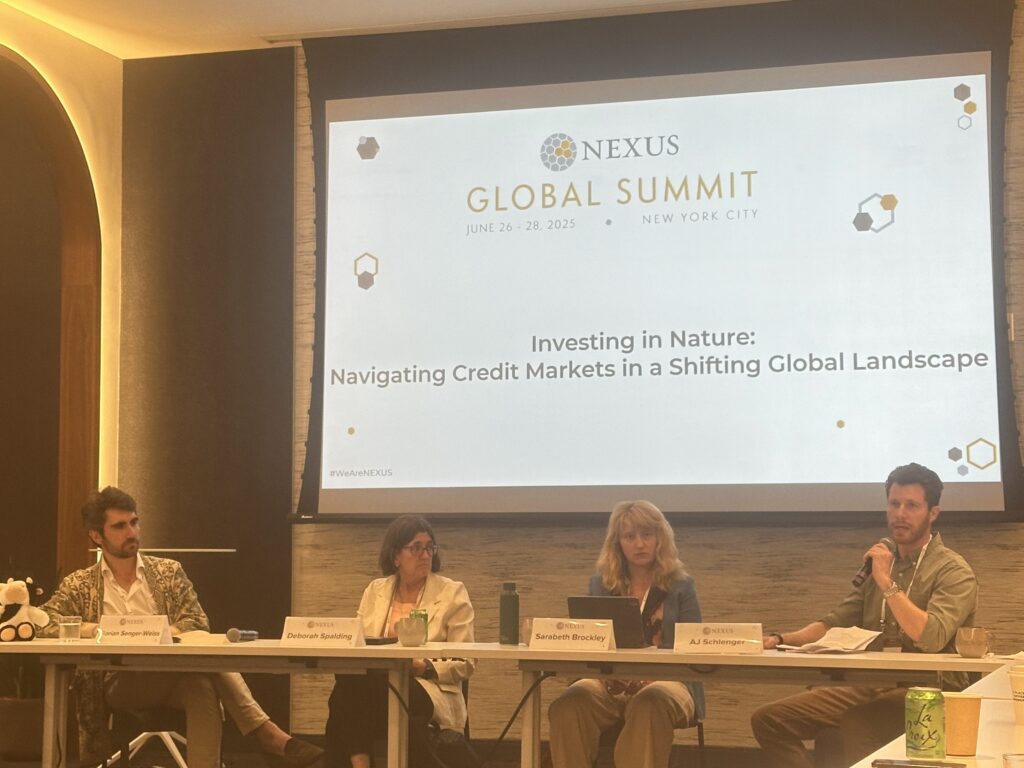
This was one of the most striking phrases, among many I heard, at the Nexus Global Summit in NYC, from a female white American philanthropist in her 40s. We were discussing the impacts of USAID budget cuts, perhaps the largest government humanitarian aid fund in the world and what this group of philanthropists and activists can do to mitigate the damage caused by a lack of funding for thousands of projects.
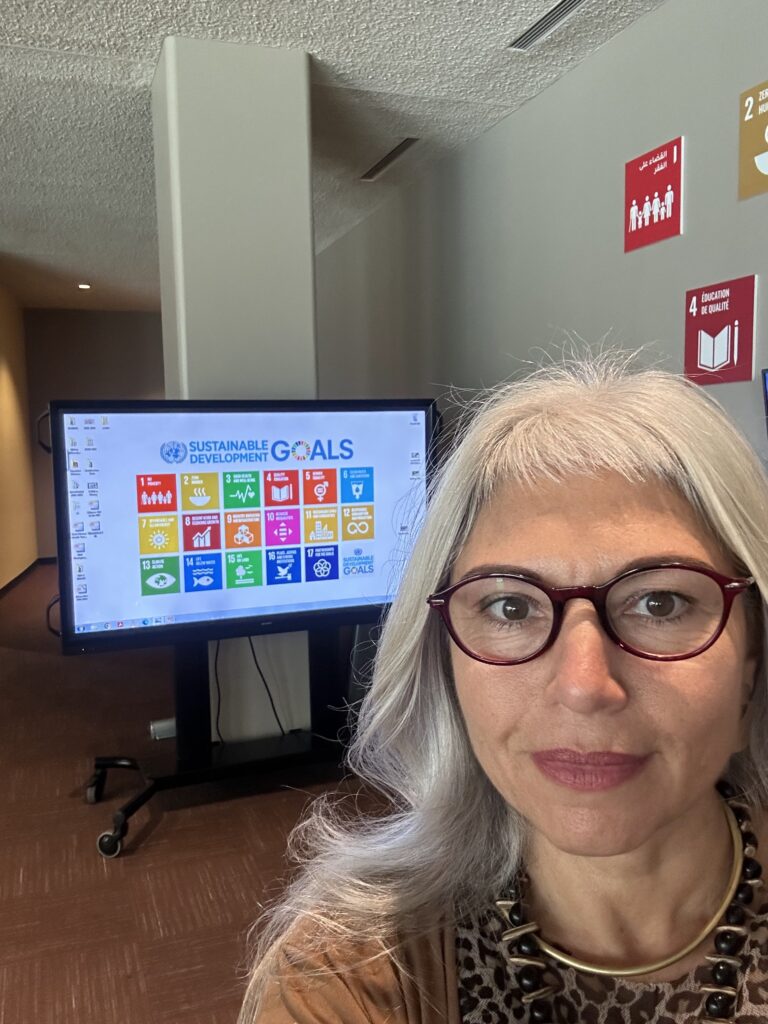
The event happened over four extremely intense days, and I felt as ifI had been catapulted into a parallel reality. Remember the cartoons and comics from the Justice League? At various moments, I felt we were co-creating that same spirit. Superheroes from all over the world united by a single cause: to be agents of transformation for a better world.
We visited the art gallery of a philanthropic family (Brandt Foundation), the Blue Meridian office (a Family Office dedicated to philanthropy and blended finance), IBM’s global strategy office, we had a session at the UN, met with the Brazilian delegation (which was large and shining, especially a group of young people aged 12 and 13 from the NGO Turma do Jiló) and then attended plenary talks and smaller, more intimate sessions, each one more interesting than the other.
I felt an overdose of endorphins and serotonin with so many inspiring stories, with so many privileged people willing to step out of their comfort zones and devote their lives to truly making a difference in the world. I cried, I laughed, I applauded, I hugged, and I talked untilI was exhausted. (And those who know me know I love a goodconversation—so imagine just how much I interacted!)
Nexus is a globally-reaching organization, and the annual event is held in NYC, where this movement was born. It forms a powerful network of philanthropists who elevate the intelligence and global action of philanthropy, as another organization I have learned so much, the Synergos Foundation.
Around 600 people from 50 different countries participated, all interested in philanthropy, impact investing, and socio-environmental activism. And attention: all food at the event (delicious!) was 100% vegan and gluten-free. A true display of coherence.
Some reflections:
There is a clear difference between the culture of giving in countries like Australia, the U.S., and the U.K. compared to Brazil. Today, philanthropy is equipped with strategic intelligence, spiritual connection, and technology. Acting locally and scaling solutions is a shared narrative. It has moved beyond a guilt-relieving, charity-based approach to one driven by the purpose of creating a better world for all. Because there’s no point in me enjoying maximum safety and comfort, reaping the benefits of elite white privilege and having the freedom to do as I wish, while other human and non-human beings suffer without access to basic needs.
In my perspective, philanthropy should challenge the system, not just treat the symptoms of the misery caused by the patriarchal structure that dominates and exploits all living beings. It’s about creating a consciousness that reconnects with nature, so that our projects serve the regeneration of humanity in harmony with biodiversity.
And to move from ego to eco, we must redefine everything—all the inherited beliefs of a society we do not need to perpetuate.
I use my socioeconomic privilege to create a new world.
That is my mantra! This is what “power” means to me: building the dreamed reality where all beings are included.
And to leave behind the broken patriarchy, at Instituto Terra Luminous we’ve chosen to name the new system “naturarchy”—a system where social laws mirror and are inspired by the laws of nature. For this to happen, we must reframe our relationships—emotional, environmental, and financial. I often say that being a millionaire today means influencing over a million people toward a Regenerative Culture.
I sensed that the U.S. remains the epicenter of the philanthropic movement, even though beautiful, highly successful initiatives are happening in Afghanistan, Sudan and several African countries, India, Ecuador, Mexico, and Brazil.
I noticed that U.S. philanthropy, represented at the Summit, was strongly focused on social programs, filling the gap left by public services and providing healthcare, higher education, public policy advocacy, and support for small entrepreneurs. I was surprised that there was almost no mention of projects with a stronger socio-environmental approach, regardless of the Amazon Investor Coalition,while AI was in the spotlight.
Prince Harry, Duke of Sussex, gave a heartfelt talk about life purpose and how psychotherapy helped him heal his traumas, connecting him with his personal mission. His activism focuses on leading campaigns to reduce the influence of social media, especially in protecting teenagers and young people. This is admirable and necessary, but again, I felt the absence of ultra-influential figures like him addressing more uncomfortable topics that would challenge the comfort zones of the industries their peers are part of. This includes rethinking economic growth and ensuring financial resources flow toward climate justice worldwide.
In my view, given the escalating tragedy unfolding before our eyes on this planet, we need to put the crisis of biodiversity loss, in oceans and forests, at the heart of global discussions. We must give proper attention to the global water and food crises. These are far more urgent topics than AI and social media. Strategically investing in a standing forest economy should be the priority.
“We can’t talk about Climate Emergency here in the U.S. anymore.”
I heard this from more than one person during the week in NYC. I suspect that political pressure, almost resembling censorship, underTrump’s government may have influenced the diminished use of terms like Climate Justice, Biodiversity Credits, SociobiodiversityEntrepreneurship, and Ecological Restoration during the event.
Still, the overall impact was extremely positive.
I am deeply grateful for the invitation extended by Ana Marina de Castro, coordinator of Nexus Brazil, and for the incredible welcome from the entire Nexus team guided by the brilliant Tatiana Piva. Our dear Atlantic Forest, which is often invisible outside Brazil, was proudly represented through the strength and inspiration of the projects, programs, and research center we have been sustaining over the past 10 years at Instituto Terra Luminous, in the stretch of forest with the greatest tree diversity in the state of São Paulo (according to NewFor/ESALQ-SP research).
Yes, philanthropy does make a difference in the world.
Events like this can catalyze deep change.
Let ‘s keep sharing!
By Fabiana Maia
2025